Led by Rob Cover and Shiyang Zhu (RMIT Digital Ethnography Research Centre), this project worked with minorities stakeholder organisations to gain insights into the kinds of guidelines for managing, reporting and coping with digital harms.
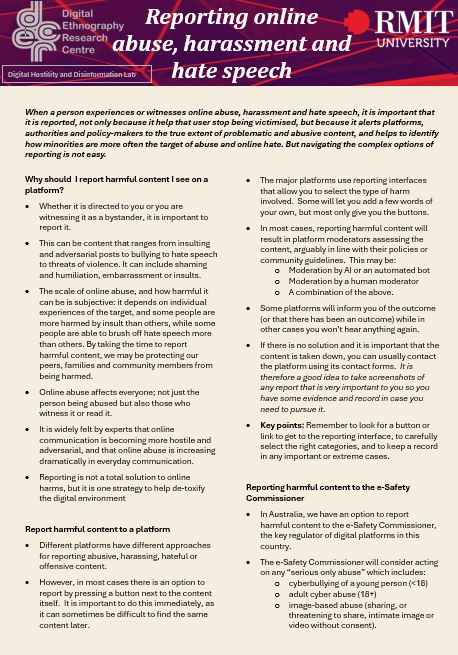
Drawing on a range of current projects in digital hostility, disinformation, scam communication and other digital harms, we developed a series of guidelines (fact sheets) for social sector, minority advocacy and representative organisations to review. The guidelines served as elicitation documents to provide key insights into the needs, preferences and format of any guidance that directly targets minority communities (as opposed to existing generic, population-wide guidance).
Sample guidelines
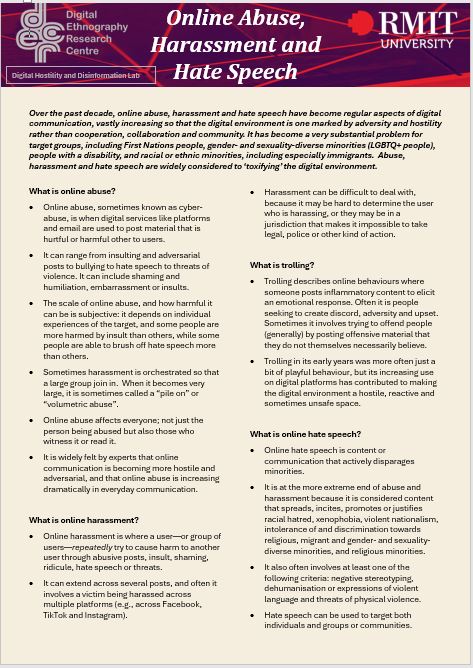
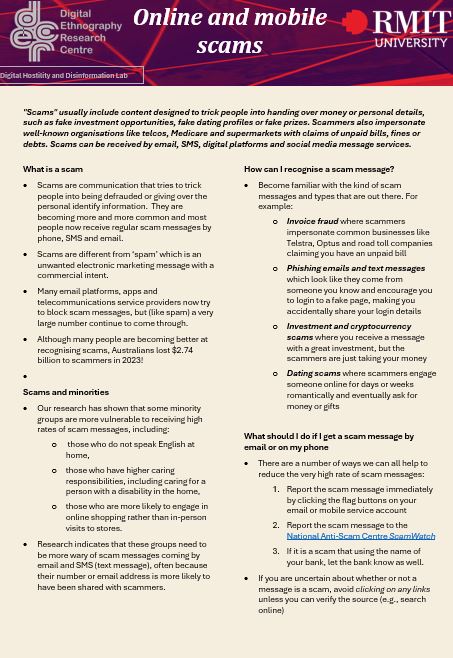
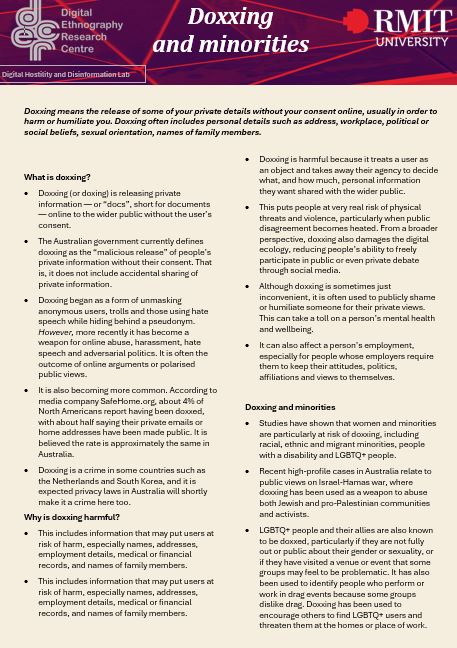
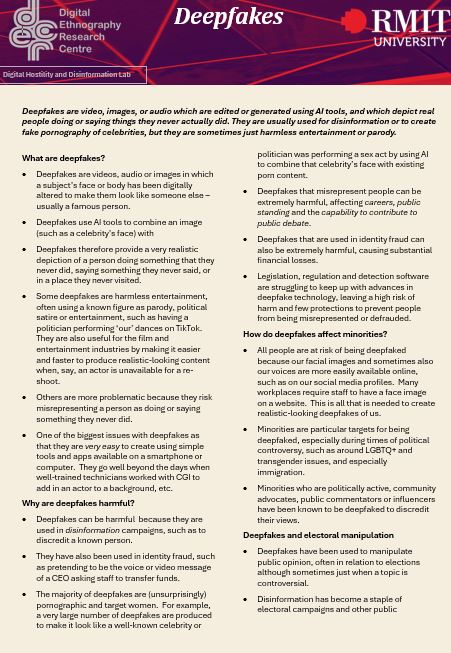
A selection of the guidelines we developed are available below (please click the title to view or download). You are very welcome to share these.

Key project findings
- Minority community representative, service provision and advocacy organisations recommend guidelines that address the specific needs of minority groups (older Australians, people living with disabilities), rather that “minority Australians” as a cluster.
- Organisations working with people with disabilities recommend even more accessible language for people with intellectual disabilities and people with learning difficulties, both of whom remain high-target communities for digital harms, including online abuse and scams.
- Video explainers would be beneficial.
- All participating organisations felt targeted, community-specific guidance was significantly more likely to be effective and helpful than generic, population-wide guidance texts.
 RMIT Digital Hostility and Disinformation Lab (@ The Digital Ethnography Research Centre)